
Insights
Legal notes in plain words — property, inheritance, residency and daily life in the Canary Islands, explained for international readers.
Search the blog… Featured
Living in a tourist complex in the south of Tenerife: the single-operator rule, what an owner can and cannot do, and the window to 2028
A unit in a tourist complex is an accommodation unit, not a home: the Canary tourism Act binds every unit to one operator, the renovation Act forbids turning it into a dwelling, and fines run to 300,000 euros. What the courts decided in Arona and Gran Canaria, the question now before the Supreme Court, the decree-law that lets owners ask for a change of use until March 2028, the bill the Parliament rejected on 14 October 2026, the decree the Government announced, and ten papers to read first.
Read the post
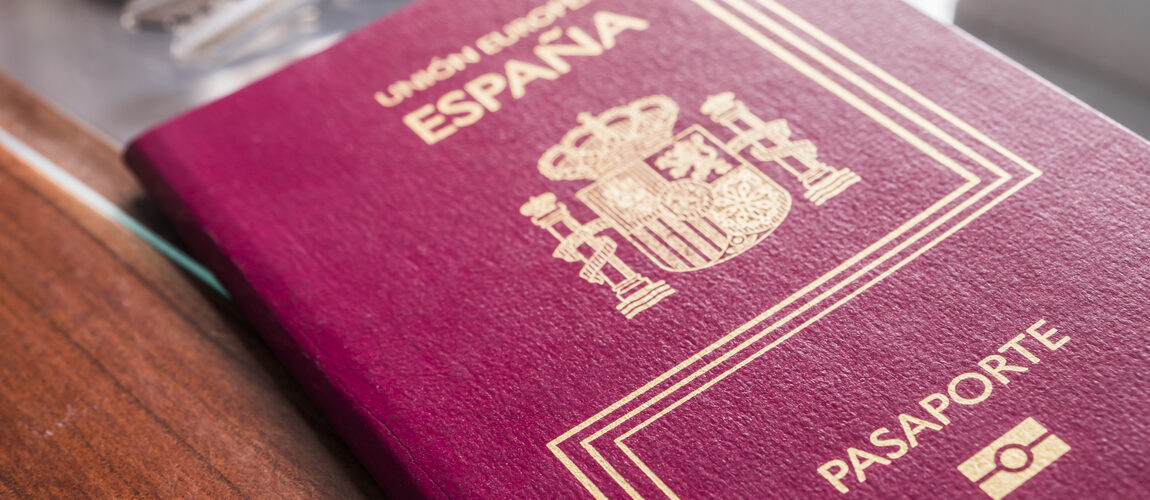
Spanish nationality by residence in 2026: years, exams, absences and how long it really takes
Three neighbours on the same street can ask for a Spanish passport on three different timetables: ten years of residence, two, or one. The Civil Code sets the periods and says which residence counts. This guide follows the years each applicant needs, what the courts say about absences, the two Instituto Cervantes exams and who is exempt, the file and its 327.05 euros, the Ministry's own figures on how long an answer takes, and the 180 days to take the oath.

Dying without a will in Spain: who inherits, what the surviving spouse receives and how a notary declares the heirs
The bank freezes the account and asks for a declaration of heirs. Without a will, the law of the country where the deceased lived decides who inherits; in the Canary Islands that is the Civil Code: children first, then parents, then the spouse, who otherwise receives a usufruct. This guide follows the order of heirs, the spouse's share, the notarial act and its twenty working days, the three certificates, the papers that come from abroad and the six-month tax clock.

Getting a foreign divorce recognised in Spain: EU decrees, British divorces after Brexit and the exequátur
Where is your divorce? A Spanish registrar, notary or judge will ask before you marry again, sell the home or change the orders. A decree from another EU country is recognised without any procedure, with the court's certificate. A British one follows the date the proceedings began: up to 31 December 2020, the European rules; later, Spain's own Act. For those and for every non-EU divorce there are two routes, the Civil Registry check and the exequátur, and this guide sets out both.

Hidden defects after buying a home in Spain: the six-month trap and the other routes
The Civil Code gives the buyer of a home a remedy for defects that could not be seen, and six months from the deed to use it, whenever the leak appears. What counts as a hidden defect, the two remedies, how a request to negotiate now suspends the period, and the routes that remain afterwards: breach of contract when the home is unfit to live in, deceit when the seller knew, the builders' ten, three and one years, and the limits of the «as seen» clause.

Buying a bar or a shop in Tenerife South: the traspaso, the lease and the licence, step by step
The advertisement says «licence, terrace, stock and staff included». The law sees separate things: a lease the landlord must consent to or be told of within a month, employees who come with the business, tax and Social Security debts that follow it unless the certificates are asked for before signing, a title to operate that the town hall and the Cabildo must be told about, and a terrace with its own permission. A traspaso in the south of Tenerife, step by step.

Spain's Supreme Court trims the immigration regulation: families of Spaniards, dependent parents and children born in Spain
Two Supreme Court rulings, effective for everyone since 22 September 2026, take ten points out of Spain's immigration regulation. A guardianship constituted abroad now counts for the guardian of a Spanish child; a dependent parent can prove dependency in Spain; a criminal record no longer closes the file alone where a Spanish citizen would have to leave; children born here are not excluded for marrying or travelling; nobody is forced to file online. What stayed, and what to do with a refusal.