Hidden defects after buying a home in Spain: the six-month trap and the other routes
 Olga Caballero & Co.Law firm · Tenerife & Fuerteventura
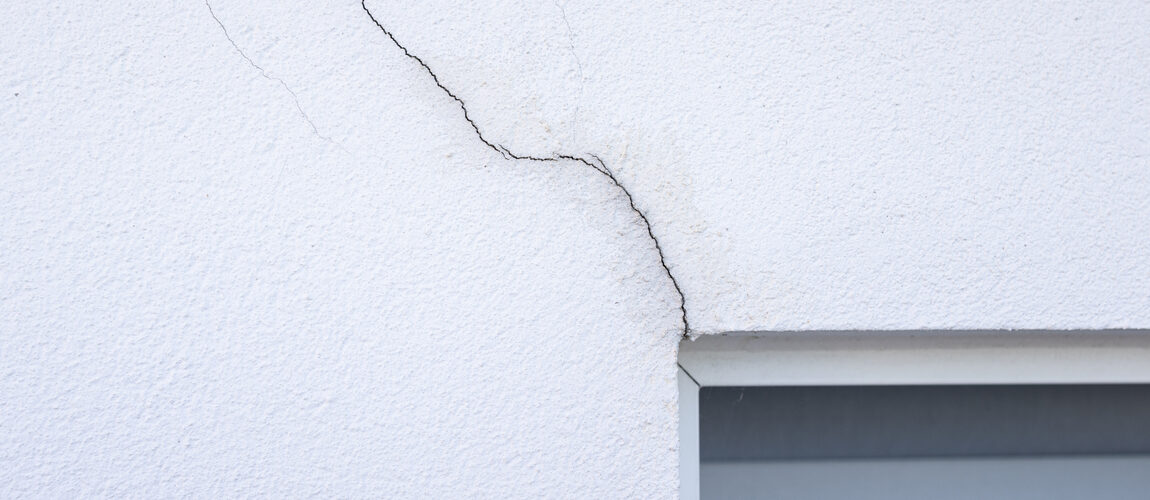
You signed the deed in June and moved into the flat in Costa Adeje in July. In November the first heavy rain comes through the bedroom ceiling. The builder you call lifts a strip of plasterboard and finds a stain that is years old and has been painted over more than once. The seller lives in Düsseldorf and does not answer. Spanish law gives the buyer of a home a remedy for defects that could not be seen, and it gives very little time to use it: six months, counted from the day the property was handed over, not from the day the damp appeared. By November five of them are gone. This note explains that remedy and its clock, and the routes that remain when the clock has run out: breach of contract, deceit, the developer's liability in a newer building, and what a clause that says «as seen» does and does not exclude. Quotations are in Spanish with the reading in English.
What the Code calls a hidden defect
The seller's duty is in the Civil Code. He must answer for the hidden defects of the thing sold si la hacen impropia para el uso a que se la destina, o si disminuyen de tal modo este uso que, de haberlos conocido el comprador, no la habría adquirido o habría dado menos precio por ella, if they make it unfit for the use it is meant for, or reduce that use so much that the buyer, had he known of them, would not have bought it or would have paid less (article 1484). The same article draws the line on the other side: the seller is not liable for los defectos manifiestos o que estuvieren a la vista, defects that are manifest or in plain view, nor for those a buyer who is an expert should easily have recognised because of his trade.
So a defect counts when it was there before the sale, could not be seen on a normal visit, and matters: a roof that leaks, a slab that moves, drains that back up, damp sealed behind fresh paint. A scratched door or a tired kitchen does not. And it counts whether or not the seller was aware of it. The seller answers for hidden defects aunque los ignorase, even if he did not know of them (article 1485).
Two remedies, and damages if the seller knew
The buyer chooses between two things. He may withdraw from the contract and recover the expenses he paid, or keep the home and rebajar una cantidad proporcional del precio, a juicio de peritos, have the price reduced by a proportional amount, as assessed by experts (article 1486). The second is the usual choice for a home: nobody wants to undo a purchase over a roof, and what the court awards is the part of the price that the defect takes away, measured by an expert report.
Damages are another matter. The Code adds them only when the seller knew of the defects and kept silent, and only if the buyer opts to undo the sale: además se le indemnizará de los daños y perjuicios, si optare por la rescisión, he shall also be compensated for the damage, if he opts for rescission. A seller who honestly did not know owes the price reduction, or takes the home back, and nothing more.
The six-month trap
The remedy is short-lived. The actions of those articles se extinguirán a los seis meses, contados desde la entrega de la cosa vendida, shall be extinguished after six months, counted from the delivery of the thing sold (article 1490). Delivery is, as a rule, the day of the deed: signing it counts as handing the property over unless the deed itself says otherwise (article 1462). The period does not wait for the defect to show itself: a leak that appears with the autumn rain in a home bought in spring arrives when most of the time has passed, and one that appears the following winter arrives too late.
The Supreme Court calls it a period of caducity, not of limitation, and the difference is practical. A limitation period starts again when the debtor receives a written claim (article 1973). A caducity period does not: within the six months the claim must be in court, and a letter to the seller, however firm, has not traditionally stopped it. Since 3 April 2025 one thing does. Before suing, the parties must attempt a negotiation by one of the means the law lists, and the request to open it, if it defines what is in dispute, interrumpirá la prescripción o suspenderá la caducidad de acciones, interrupts limitation or suspends caducity from the date on which the attempt to notify the other party is on record (Ley Orgánica 1/2025, article 7). The clock starts running again if there is no meeting and no written answer within thirty days, and suspension is not a fresh start: when it ends, only the days that were left remain. Our note on suing in Spain after the 2025 reform explains those means; here the point is that the request must go out, properly drafted and to the right address, before the six months end.
Six months from the keys, not from the leak. If the defect appears in month five, the expert, the request to negotiate and the claim all have to fit into what is left.
When six months have gone: the other routes
The warranty for hidden defects is not the only thing a buyer has. Which of the other routes is open depends on how serious the defect is, what the seller knew and how old the building is.
| The route | What it needs, and how long you have |
|---|---|
| Hidden defects (Civil Code, articles 1484 to 1490) | A serious defect that existed before the sale and could not be seen. Six months from delivery |
| Breach of contract (articles 1101 and 1124) | The home is unfit for the purpose it was sold for. Five years |
| Deceit or error (articles 1265 to 1270 and 1301) | The seller hid or misrepresented something essential. Four years from completion |
| The builders' liability (Ley 38/1999, articles 17 and 18) | Damage in a building within its ten, three or one year periods. Two years from the damage |
When the defect is the whole thing: aliud pro alio
Spanish courts use a Latin name, «aliud pro alio», one thing for another, for the case in which what was delivered is so unfit that the seller has not really performed. The Supreme Court applied it to a home in its judgment 317/2015, of 2 June. A semi-basement in a village of Málaga had been converted into a flat without a licence and sold as a dwelling, with a mortgage and an insurance policy that both described it as a home. With the first rains it flooded. The Court was brief: El que se venda una cosa como vivienda que no es habitable es aliud pro alio, selling as a dwelling something that cannot be lived in is aliud pro alio. The sale was undone and the price returned.
The route matters because of its clock. In an earlier ruling the Court had said that la acción por incumplimiento cuando existe un aliud por alio no está sujeta al plazo de caducidad de las acciones edilicias, the action for breach, where there is an aliud pro alio, is not subject to the caducity period of the warranty actions (judgment 35/2010, of 17 February). It is an ordinary action for breach of contract, with the general five-year period of article 1964 for contracts made since 7 October 2015. Its remedies are those of any breach: termination of the sale under article 1124, with damages under article 1101.
It also has limits, and the first is in the 2015 judgment itself. The doctrine asks for una completa frustración del fin del contrato, a complete frustration of the purpose of the contract. A roof that can be repaired is a hidden defect, however expensive the repair. A home that cannot lawfully or physically be lived in is something else. And the Court excludes the buyer who knew: where the buyer had known and accepted the risk that made the property unfit, the seller's breach is not what caused the harm. A buyer who was told about the missing licence and bought at a discount will not be heard to say that he was sold one thing for another. What a licence check looks like before buying is in our note on building licences in the Canary Islands.
If the seller knew
Knowledge changes the case in three ways. It adds damages to the warranty remedy, as article 1486 says. It defeats the clause by which the buyer waives the warranty, as the next section explains. And it opens a different action altogether: deceit. There is deceit when one party induces the other to contract con palabras o maquinaciones insidiosas, with insidious words or schemes (article 1269), and the Supreme Court includes in it la reticencia dolosa del que calla o no advierte a la otra parte en contra del deber de informar que exige la buena fe, the deliberate reticence of one who keeps silent or does not warn the other party, against the duty to inform that good faith requires (judgment 123/2022, of 16 February). Serious deceit lets the buyer have the contract annulled within four years of its completion (article 1301). Deceit that only made the terms worse leaves the sale standing and obliges the seller to pay damages (article 1270).
Proving what a seller knew is easier than it sounds, because buildings keep records. The minutes of the owners' meetings mention the leak in flat 3B and who was asked to repair it. The community's insurer has a file. The builder who painted over the stain sent an invoice. The neighbour below remembers the buckets. None of this is in the deed, and all of it can be asked for.
«As seen»: what the clause excludes, and what it cannot
Almost every deed for a resale says that the buyer knows the property and accepts it in its present state. The Code allows the parties to exclude the warranty, with one condition that buyers rarely hear about: the rule that the seller answers for hidden defects no regirá cuando se haya estipulado lo contrario, y el vendedor ignorara los vicios o defectos ocultos de lo vendido, shall not apply when the contrary has been agreed and the seller was unaware of the hidden defects of what was sold (article 1485). Both parts are needed. The clause protects the seller who did not know. It does nothing for the seller who did.
The clause has a second, quieter effect. Whatever the buyer saw, or would have seen with ordinary care, is no longer hidden. That is the argument for a technical inspection before the private contract, not after it: what the surveyor finds can be negotiated into the price, written into the arras contract as a condition, or become the reason not to buy. The checks that belong to that stage are in our guide to buying property in the Canary Islands.
A newer building: the ten, three and one years of the Building Act
If the building was finished in the last decade there is another defendant, and it is not the person who sold you the flat. The Building Act makes the developer, the builder and the architects answer to the owners y los terceros adquirentes, and to those who later acquire the building or part of it, for material damage that appears within fixed periods counted from the handover of the works: ten years for defects that affect the structure, three for defects of the building elements or installations that leave the home below the habitability requirements, and one for defects in the finishes, which is the builder's alone (Ley 38/1999, article 17). The claim must be brought within two years of the damage appearing, sin perjuicio de las acciones que puedan subsistir para exigir responsabilidades por incumplimiento contractual, without prejudice to the actions that may remain to demand liability for breach of contract (article 18).
For the second buyer of a flat that is six years old, this means that cracks of structural origin can still be claimed from the developer, with the ten-year insurance that the Act provides for structural damage behind it (article 19), while a failed waterproofing layer is already outside its three years. What the first buyer of a new home can demand before paying is in our note on buying off-plan.
One route that buyers expect is not there. The legal guarantee that consumer law attaches to what a business sells does not reach a home, even when the seller is a company. For that part of the consumer act se consideran “bienes” a las cosas muebles corporales, «goods» means tangible movable things (consolidated consumer act, article 59 bis). What the act does keep for dwellings is a rule on liability for the damage that defects in a home cause, against those who build or market homes as a business (article 149).
The first weeks: evidence, in order
- Date everything. Photographs and video of the damage as it appears, with the date, and a note of when it was first seen. The deed gives the other date that matters.
- An expert before a builder. A report by an architect or a technical architect on the cause, the age and the cost of the defect, before anything is repaired. Urgent work to stop further damage is fine if it is photographed first.
- Tell the seller in writing. A burofax with certified content, describing the defect and what you claim. Drafted as a request to negotiate, it is also what suspends the six months.
- Look for what the seller knew. The minutes of the owners' meetings, the community's insurance file, invoices for earlier repairs, the neighbours.
- Check the insurance. Your own home policy and the community's may cover the damage itself, whoever turns out to be responsible for the defect.
- Count the months. If the route is the hidden-defect warranty, the claim goes to court before the sixth month ends.
What our property team does
Claims for construction defects and against developers are part of our property practice in Tenerife and Fuerteventura, from the offices in Costa Adeje and Corralejo. We read the deed and what was said before it, work with the expert on the report, send the request that suspends the period, and tell you plainly which of the routes is still open and what it is worth. We agree a plan and a fee before any work begins, and nobody can promise what an expert will find or a court will decide. The service is described on our property law page, and the contact page has both offices.
Common questions
I found the defect eight months after completion. Is it too late?
For the hidden-defect warranty, yes: its six months run from delivery and cannot be recovered. Other routes may still be open. If the home is unfit to live in, the action for breach of contract has five years; if the seller hid the defect, the action for deceit has four; and in a building less than ten years old there may be a claim against the developer and the builder.
The deed says I bought the property «as seen». Can I still claim?
Yes, if the defect was hidden and the seller knew of it. The Civil Code lets the parties exclude the warranty only where the seller was unaware of the defects. What the clause does remove is any claim for defects that were visible, or that an ordinary inspection would have shown.
Do I have to prove that the seller knew?
Not to obtain a price reduction or to return the home: the seller answers for hidden defects even if he did not know of them. You do have to prove it to obtain damages, to overcome a clause that excludes the warranty, or to rely on deceit.
Can I keep the home and be paid for the repair?
The warranty gives a proportional reduction of the price, assessed by experts, which is not always the same as the repair bill. The full cost of repair and other losses are damages, and the Code adds damages to the warranty only when the seller knew and the buyer undoes the sale; outside it, they are claimed as breach of contract or deceit.
My flat is six years old. Can I claim against the developer?
For structural defects, yes: the Building Act gives ten years from the handover of the works, and two years to claim from the day the damage appears. The three-year period for defects that affect habitability and the one-year period for finishes will already have passed.
General information on Spanish law as it stands in October 2026 (Civil Code, articles 1101, 1124, 1265 to 1270, 1301, 1462, 1484 to 1490, 1964 and 1973; Ley 38/1999, articles 17 to 19; the consolidated consumer act, articles 59 bis and 149; Ley Orgánica 1/2025, articles 5 and 7; Supreme Court, Civil Chamber, judgments 35/2010, 317/2015 and 123/2022), not advice on any particular purchase: a claim depends on its deed, its dates and its expert report.
This note is general information, not legal advice. For advice on your specific situation, consult a lawyer.
Wondering how this applies to your case?
A first consultation in person or by video, in any of our twelve working languages.
Keep reading

Buying a bar or a shop in Tenerife South: the traspaso, the lease and the licence, step by step

Spain's Supreme Court trims the immigration regulation: families of Spaniards, dependent parents and children born in Spain