Spain's '100% tax' on non-EU buyers: where it really stands
 Olga Caballero & Co.Law firm · Tenerife & Fuerteventura

In January 2025 the Spanish government announced its intention to tax home purchases by non-EU, non-resident buyers at up to 100% of the property value. Few legal headlines have travelled further, or caused more alarm among British, and other non-EU, buyers looking at the Canary Islands.
Eighteen months later, the calls we receive still open with the same question: "Can I still buy — and what will it really cost me?"
Where the proposal stands today
The measure — formally a complementary state tax on property transfers to non-EU non-residents — was submitted to Parliament as a bill on 22 May 2025. Since then:
- It was never debated or voted: registered as proposición de ley 122/000196, it waited for its first vote from September 2025 until the Cortes were dissolved on 6 October 2026, and it lapsed that day (the Congress's record reads «Concluido – Caducado»).
- The Government's January 2026 housing package left it out.
- The housing decree-law of 29 September 2026 left it out again, and was itself repealed by the Congress on 2 October; the one that replaced it from 8 October, Real Decreto-ley 29/2026, leaves it out too; our note on the October decrees covers the decree, its repeal and the return.
- Key parliamentary partners have publicly opposed it, and constitutional-law and EU-law specialists have questioned whether it could survive review in its present form.
In plain words: as of mid-2026 there is no 100% tax. Nothing extra is payable today, and a completed purchase is completed law — under general Spanish tax principles a new tax does not reach back to transactions closed before it enters into force.
A new Cortes could table the measure again after the elections of 29 November 2026; we monitor it for our clients, and if it ever advances the sensible response is planning, not panic.
What a buyer actually pays in the Canary Islands
The Canary Islands remain one of Spain's most affordable regions to transact in:
- Resale property: transfer tax (ITP) at the general Canarian rate of 6.5%.
- New builds: IGIC (the Canarian indirect tax, in place of VAT) at 7%, plus stamp duty.
- Notary, registry and legal fees on top — typically a further 1–2%.
Compare that with the 10–11% many mainland regions charge and the islands look better, not worse, than they did before the headlines.
One change that IS real: buying no longer buys residency
Spain's golden visa ended on 3 April 2025. Purchasing property — at any price — no longer carries a residence permit. If your plan involves spending more than 90 days in every 180 in Spain, the purchase and the immigration route now have to be planned separately. We cover the routes that remain in our note on the new border reality.
Due diligence matters more than ever
The fundamentals of a safe purchase have not changed, but two recent rules make the checks longer:
- Since April 2025, communities of owners can bar new holiday lets with a three-fifths vote — if you are buying to rent, the community's statutes are now a deal-point.
- The new Canarian holiday-rental law caps tourist use per municipality — we explain it here.
Title, charges, licences, community rules, tax planning: the boring part is the part that protects you.
The market noise changes every season. The law changes on specific dates, in official gazettes — and that is what your decisions should be built on.
If you are weighing a purchase in Tenerife or Fuerteventura, our real-estate team can review your case in your own language — book a consultation.
This note is general information, not legal advice. For advice on your specific situation, consult a lawyer.
Wondering how this applies to your case?
A first consultation in person or by video, in any of our twelve working languages.
Keep reading
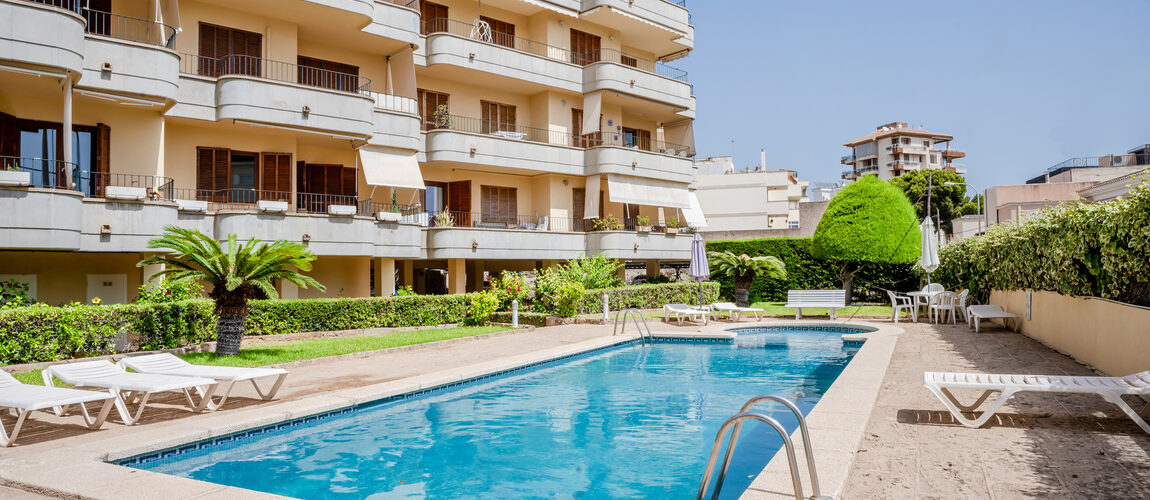
Living in a tourist complex in the south of Tenerife: the single-operator rule, what an owner can and cannot do, and the window to 2028

The tenant stops paying: eviction for unpaid rent in Spain in 2026, step by step