The Canary Islands' new holiday-rental law: what Ley 6/2025 means for owners
 Olga Caballero & Co.Law firm · Tenerife & Fuerteventura

Renting a holiday home in the Canaries used to be governed by a 2015 decree and a great deal of improvisation. Between 2024 and the end of 2025, three layers of new law arrived — and together they redraw the map for every owner in Tenerife and Fuerteventura.
Layer one: the state registry — annulled in May 2026
Royal Decree 1312/2024 created a single national rental registry: from 1 July 2025 every short-term let needed a state registration number and platforms had to delist properties without one. On 19 May 2026 the Supreme Court (judgment 620/2026, Third Chamber) annulled that registry and the duty to register: tourism and housing are regional powers, so the State could not impose a registration of its own on top of them. What survives of the decree is the digital single window and the platforms' duty to pass rental data to the State. In practice: a state number is no longer a condition for advertising, and a number you already hold has simply lost that role — your Canarian registration is the one that carries your right to operate.
Layer two: your community of owners got a veto
A reform in force since 3 April 2025 allows communities of owners to approve — or refuse — new holiday lets in the building by a three-fifths majority. Existing, lawfully operating rentals are not expelled by the vote, but anyone buying "to rent" must now read the community's minutes and statutes before signing anything.
Layer three: the Canarian law — Ley 6/2025
On 10 December 2025 the Canary Islands passed their own law on the sustainable use of housing for tourism, which overrides the 2015 decree wherever the two conflict. Its headlines:
- A cap: as a rule, no more than 10% of the housing stock of each municipality (or zone) may be dedicated to holiday rental — up to 20% on El Hierro, La Gomera and La Palma.
- Municipal zoning: town halls decide through their planning where a home may be let to tourists; the owner then files a responsible declaration with the island cabildo, which registers the let and inspects it.
- New builds must wait: homes cannot be put to tourist use until ten years after completion.
- Protected housing (VPO) is excluded outright, and buildings operated wholesale as de-facto hotels are banned.
- Existing compliant rentals continue under transitional rules — but "compliant" is doing a lot of work in that sentence: registration, habitability and the paperwork trail all count. As a rule the activity may go on for five years, to December 2030, and since August 2026 one date comes first: an owner who registered before the law without filing the classified-activity notice (comunicación previa) at the town hall must file it before 31 July 2027 or stop (Ley 7/2026).
October 2026: a State decree repealed within days, and a second one in force since 8 October
A State decree-law in force from 1 October 2026 (Real Decreto-ley 26/2026) redrew, for a few days, the border between a holiday let and a lease: the tourist stay that falls outside the tenancy act could not exceed thirty-one days, the old seasonal contract gave way to a temporary-housing lease, and fines were put behind the digital single window. The Congress repealed the decree on 2 October 2026, and the three changes went with it for six days: since 8 October 2026 Real Decreto-ley 29/2026 writes them again, pending the vote of the Permanent Deputation of the dissolved Congress within thirty days of its publication on 7 October (nothing had been published by 21 October): the tourist stay the tenancy act leaves to the tourism rules may not exceed thirty-one days (article 5.e), a let for a season is a temporary-housing lease with a written reason (articles 2.3 and 9 bis), and the platforms' fines are back behind the digital single window (title V). On the islands a figure does remain, in the regional law: since August 2026 it presumes that a home let for thirty-one days or less is a holiday let unless the contract records why the tenant needs temporary accommodation (Ley 6/2025, articles 11 and 12). Neither the decree nor its repeal touches the Canarian registration, the municipal caps or the community's vote. Our note on the October decrees explains what was repealed, what came back and what the vote can change.
What this means in Corralejo and Costa Adeje
Both towns are exactly where demand — and therefore the caps — will bite first. Two practical consequences:
- If you already rent: verify that your Canarian registration is in order (the state number no longer carries your right to operate) and keep evidence of your activity — transitional protection follows the paperwork.
- If you are buying to rent: the licence question now comes before the purchase, not after. A flat without community consent, in a saturated zone, or built last year may simply never obtain one — and its price should reflect that. And a registration does not pass to a buyer: the consolidated use (uso turístico consolidado) the law gives today's operators ends when the property changes hands, an inheritance apart.
The era of "buy first, licence later" is over in the Canaries. The licence IS the asset now.
Our real-estate team checks the rental status of a property before you commit — ask us about your case.
This note is general information, not legal advice. For advice on your specific situation, consult a lawyer.
Wondering how this applies to your case?
A first consultation in person or by video, in any of our twelve working languages.
Keep reading
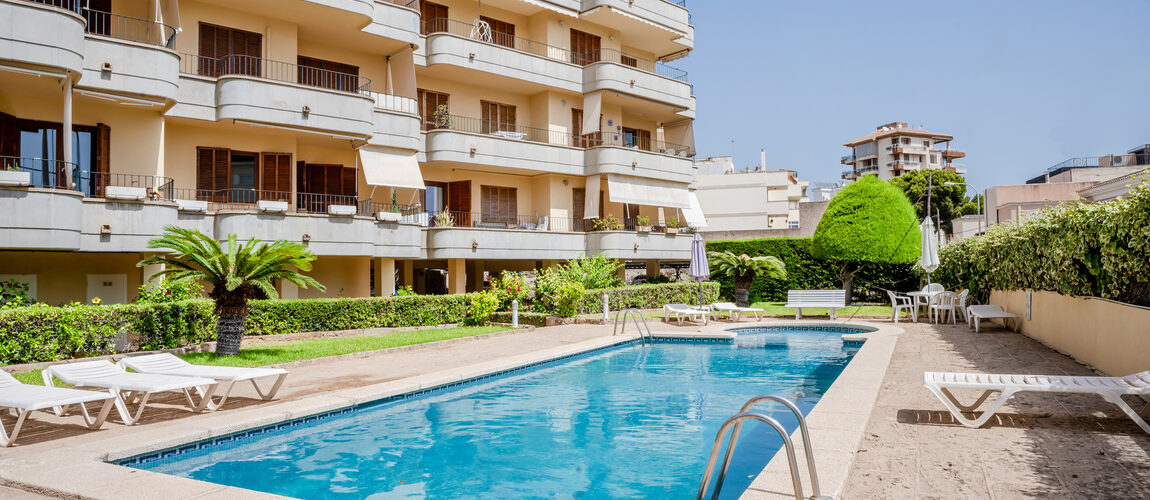
Living in a tourist complex in the south of Tenerife: the single-operator rule, what an owner can and cannot do, and the window to 2028

The tenant stops paying: eviction for unpaid rent in Spain in 2026, step by step