
Insights
Legal notes in plain words — property, inheritance, residency and daily life in the Canary Islands, explained for international readers.
Search the blog… Featured
EU citizens moving to the Canaries: the registration certificate, your family's card and permanent residence
The registration certificate is the simplest residence paper Spain issues and the one most EU newcomers forget. This note explains who must ask for it and when, what a worker, a pensioner or a student has to show, how the means test is read in 2026, how a husband or wife from outside the Union gets the family card, what the Supreme Court said about health cover and about absences, what permanent residence requires after five years, and what the certificate does not do.
Read the post
Spanish nationality by residence in 2026: years, exams, absences and how long it really takes
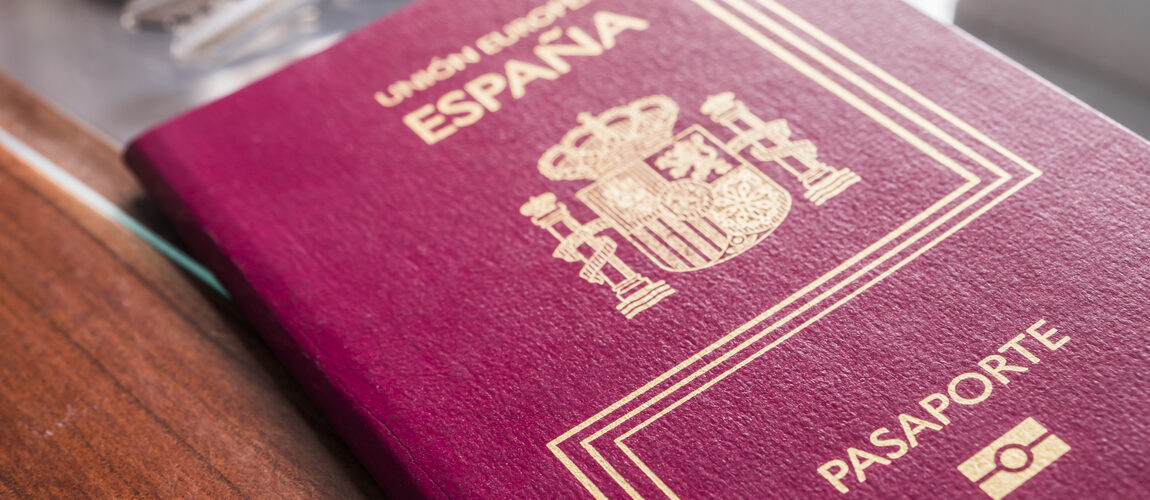
Three neighbours on the same street can ask for a Spanish passport on three different timetables: ten years of residence, two, or one. The Civil Code sets the periods and says which residence counts. This guide follows the years each applicant needs, what the courts say about absences, the two Instituto Cervantes exams and who is exempt, the file and its 327.05 euros, the Ministry's own figures on how long an answer takes, and the 180 days to take the oath.

Spain's Supreme Court trims the immigration regulation: families of Spaniards, dependent parents and children born in Spain
Two Supreme Court rulings, effective for everyone since 22 September 2026, take ten points out of Spain's immigration regulation. A guardianship constituted abroad now counts for the guardian of a Spanish child; a dependent parent can prove dependency in Spain; a criminal record no longer closes the file alone where a Spanish citizen would have to leave; children born here are not excluded for marrying or travelling; nobody is forced to file online. What stayed, and what to do with a refusal.

The digital nomad visa in 2026, from South Tenerife: the real requirements, the Social Security trap and the two doors in
The international teleworker visa read from Law 14/2013 and the immigration unit's own criteria, not from the forums: who qualifies and the 20 % rule, the one-year company and the three-month relationship, 200 % of the 2026 minimum wage the Social Security registration that ends more files than any other requirement, the consulate visa versus the three-year authorisation filed from Tenerife, the family's right to work, and the steps at the police station in Costa Adeje.

The non-lucrative visa in 2026: the real income figures, the paperwork and the mistakes that sink files
Living in Tenerife or Fuerteventura without working: in 2026 the non-lucrative visa asks for €2,400 a month for the applicant and €600 for each family member, because the IPREM is still the 2023 figure. What the new immigration regulation demands, how the consulate and the immigration office split the file, the 1+2+2 renewal path with its 183-day rule, and the mistakes that sink applications.

Golden visa renewals after the repeal: how holders keep their residence in 2026
The golden visa closed to newcomers on 3 April 2025, not to holders: valid permits keep their term and renew under the rules of the initial grant, five years at a time. What the file must prove, the ministry's June 2025 criteria on visas, family and switched investments, and why a renewed card is not a path to permanent residence or a passport unless you actually live here.

The 90/180 rule now that every entry is counted
The rule is old; the enforcement is new. Since 10 April 2026 the EES counts every day for you — how the 90/180 arithmetic works, who is exempt, and what changes for second-home owners.