Living in a tourist complex in the south of Tenerife: the single-operator rule, what an owner can and cannot do, and the window to 2028
 Olga Caballero & Co.Law firm · Tenerife & Fuerteventura
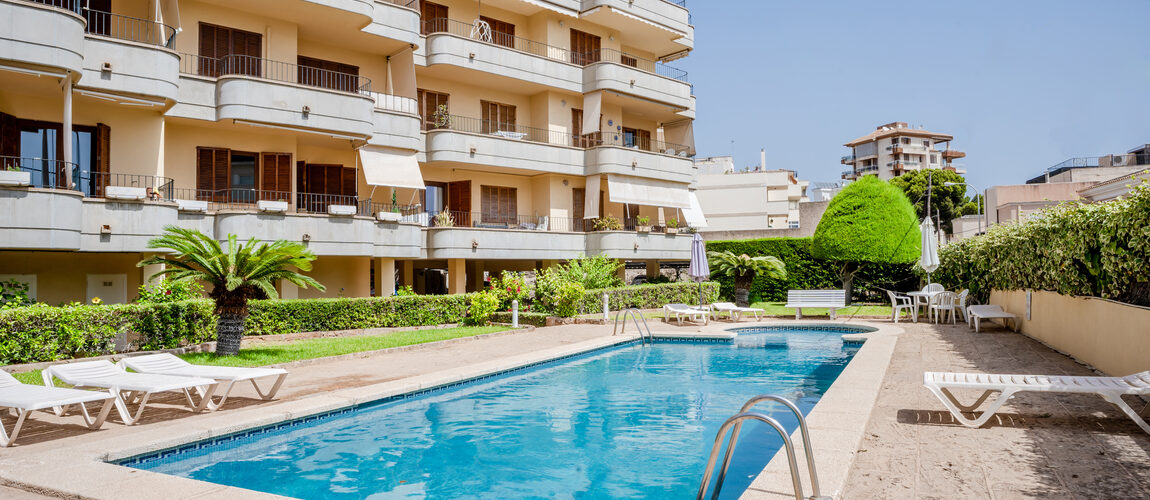
The apartment is on the second floor of a complex in Costa Adeje built in the eighties: a pool, sunbeds, a reception that still has a sign over the door. The seller has lived in it for years, the neighbour on one side lets through the company that runs the complex, the one on the other side has a holiday-let number of her own and a key box on the wall. The buyer wants to live there, or to let it. In the Canary Islands the answer does not come from the deed but from three other papers, and from a rule of 1995 that the law calls the principio de unidad de explotación, the single-operator principle: a tourist complex is run by one company and every unit in it is bound to that business. This note sets out what the principle says, what it forbids an owner, who enforces it and with which fines, what the courts decided in 2025 and 2026, the window that the Canary Government opened in March 2025 and closes in March 2028, and the papers a buyer should read before signing.
Three papers decide what a unit is, and the deed is not one of them
The first paper is the municipal plan. A parcel is zoned for tourist use, for residential use or for both, and a building on a tourist parcel is a tourist establishment whatever its owners do with it. The second is the licence of the building and its entry in the Canary tourism registry, the Registro General Turístico: an opening licence as apartamentos or as an aparthotel, a file number, the name of the company that runs it and the list of units it runs. The third is the Land Registry. Since 2013 the owners of a tourist establishment deberán hacer constar en el Registro de la Propiedad el uso al que están destinadas la parcela y el inmueble, así como las limitaciones a su modificación, must record in the Land Registry the use to which the parcel and the building are destined and the limits on changing it, and the note is taken when a new building or a horizontal division is registered or, for older buildings, when a right over them is registered (Ley 2/2013, article 23.2). The deed itself may call the unit a vivienda; it does not make it one. The Canary high court said so in 2020 about an aparthotel in Arona: Mencionar la dedicación a uso residencial y no turístico en Catastro, Registro de la Propiedad, en una escritura pública o en cualesquiera otros registros públicos no produce el efecto de cambiar el uso de manera lícita, stating the residential use in the Cadastre, the Land Registry, a deed or any other public register does not change the use lawfully.
What the three papers describe is a duty. Es deber de los titulares de los establecimientos turísticos destinarlos al ejercicio de la actividad turística, de alojamiento o complementaria, conforme a la calificación de uso asignada a la parcela por el planeamiento, it is the duty of the holders of tourist establishments to destine them to the tourist activity according to the use the plan assigns to the parcel (Ley 2/2013, article 23.1), and the Canary Act on holiday lets of December 2025 adds, for buildings in horizontal property that were configured as tourist establishments, that los elementos divididos en propiedad horizontal serán considerados unidades alojativas y no viviendas, the units divided in horizontal property are accommodation units and not dwellings (Ley 6/2025, article 5.1.c).
The single-operator principle: one company, every unit
The Canary tourism Act of 1995 requires that La explotación turística de los establecimientos alojativos, en sus distintas modalidades, deberá efectuarse bajo el principio de unidad de explotación, the tourist operation of accommodation establishments be carried out under the single-operator principle, and defines it as el sometimiento a una única empresa de la actividad de explotación turística alojativa en cada uno de los establecimientos, conjunto unitario de construcciones, edificios o parte homogénea de los mismos, cuyas unidades alojativas habrán de estar destinadas en su totalidad a la actividad turística a la que quedan vinculadas, the submission to a single company of the tourist accommodation activity in each establishment, unitary group of constructions, building or homogeneous part of one, whose accommodation units must all be destined to the tourist activity to which they are bound (Ley 7/1995, article 38). The company needs a title from the owners, título habilitante expedido por los propietarios, salvo en el supuesto que sean éstos quienes lleven a cabo directamente la explotación, unless the owners run the business themselves, and the Act says that a community of owners may be that operator (article 39.1); it must put enough staff to the task and keep a reception with permanent attention (article 40). The regional tourism department may dispense a building from the principle when its units have total independencia de acceso, servicios, zonas comunes, instalaciones y equipamiento, total independence of access, services, common areas, installations and equipment (article 41).
A building that does not follow the principle falls out of the Canary tourist offer: its tourist activity is not authorised or the authorisation is revoked, its units Sólo podrán ser alquilados o arrendados conforme a las disposiciones del Código Civil o de la Ley de Arrendamientos Urbanos y en ningún caso para uso turístico, may only be let under the Civil Code or the Urban Leases Act and never for tourist use, and no travel agency may sell them (article 42.1). The complexes already authorised when a reform of 1999 came in were given a year to adapt and a lighter rule: more than half of their units must be in the tourist operation, and where two companies competed only the one running more than half counted as the operator; a complex authorised later must have all of its units in the business. The same reform gave the operating owners a right of first refusal over any unit sold outside the business; the Constitutional Court annulled it in 2012 as civil law the region could not write, as the Arona judgment of 2020 recalled.
In practice the operator is a company that holds a contract with each owner, a contract the courts call one of explotación or of rentabilidad, under which the owner hands over the unit and receives a rent or a share of the takings, or it is the community of owners itself, constituted as the operator. At an aparthotel in Arona that is exactly what happened: after years of dispute with the company that had run it since 1990, the owners voted in April 2022 to take the operation over, constituyéndose a la comunidad de propietarios en explotadora turística, constituting the community of owners as the tourist operator, as the Canary high court recorded in July 2025. A change of operator is notified to the cabildo within thirty days with a statement that the principle is met, under the regulation of 2010.
What an owner cannot do while the complex is tourist
The first thing an owner cannot do is turn the unit into a home. Ley 2/2013 says that in establishments authorised on tourist land no se permitirán cambios de uso de sus unidades de alojamiento turístico en residenciales, no change of use of their accommodation units into residential ones is allowed, even where the parcel is mixed, unless an ordinance or a law that specialises uses says otherwise (article 5), and the tourism Act makes El incumplimiento del deber de atenerse al uso establecido por el planeamiento, destinando un establecimiento turístico de alojamiento a otros usos, the breach of the duty to keep to the use set by the plan by destining a tourist establishment to other uses, a very serious infringement (Ley 7/1995, article 75.14), as it does El incumplimiento de las normas legales relativas al principio de unidad de explotación de establecimientos de alojamiento, the breach of the legal rules on the single-operator principle (article 75.10). A very serious infringement carries a fine Entre 30.001 y 300.000 euros, between 30,001 and 300,000 euros, graded by the harm, the profit obtained and the speed with which legality is restored (article 79.2). The town hall has its own tools: a change of use without the planning title is a serious planning infringement, fined between 3,000 and 80,000 euros (Ley 4/2017, article 383.1), and the order to restore the lawful use can be issued En cualquier momento, mientras las obras o usos estén en curso de ejecución, at any time while the works or uses are being carried out (article 361.1.a).
That last clause is what decided the Arona case. The owner of a unit in an aparthotel in Arona had bought it in 2014 and used it as a home; the town hall declared the change of use unlawful. He argued that residential uses existing on 1 January 2017 on tourist parcels are compatible and consolidated, which is what a transitional provision of Ley 2/2013 says. The court read the condition that comes with it: those uses consolidate en el momento en que la ordenación urbanística haya ejecutado la especialización de usos en las zonas turísticas, at the moment when the planning has carried out the specialisation of uses in the tourist zones, and the Arona plan of 1992 had not; without that step there is no consolidation, the use is a permanent breach, and Mientras el uso continúa, ni la infracción prescribe, pues es permanente, ni la potestad de restablecimiento del orden jurídico perturbado caduca, while the use goes on neither does the infringement prescribe nor does the power to restore lapse. The duty travels with the unit: having bought it in a public deed, the owner took on every responsibility that ownership carries, and Deberá ser él, por tanto, quien cese en el uso residencial, it must therefore be he who ceases the residential use. The court also quoted the island's tourism plan, which admits residential use in Tenerife's tourist zones only in three categories of dwelling, none of them under 70 square metres of usable floor: a detached house of 150 square metres on a plot of at least 500, a grouped or collective dwelling of 100 square metres on a plot of at least 1,000, or a dwelling of 70 square metres. Two months later the same court annulled a declaration of the same town hall against another owner of a tourist apartment, because the padrón was the only proof: el empadronamiento no justifica por sí solo la tramitación de un expediente administrativo sin la efectiva comprobación del hecho, being registered as a resident does not by itself justify a procedure without the fact being actually verified. The administration must prove the residential use; once it does, time does not cure it.
The second thing an owner cannot do is let the unit to tourists on their own. Since 2023 the Canary high court has upheld, case after case, the decrees by which the Cabildo of Gran Canaria declared that holiday lets registered by individual owners inside tourist complexes in Maspalomas could not continue. The reasoning is the registry: constando en el Registro General de Turismo que el complejo está siendo explotado por un operador turístico, no cabe conceder autorización para el ejercicio de la actividad de vivienda vacacional por impedirlo el principio de unidad de explotación, since the tourism registry shows that the complex is run by a tourist operator, no authorisation for a holiday let can be granted because the single-operator principle prevents it. The court held it in September 2023 in a judgment that became final when the Supreme Court refused to hear the appeal in February 2025, and repeated it in a series of judgments in 2025, the last one in October; it did not matter that the units had been taken out of the operator's list, that the owner called the unit a dwelling, or that the operator had told the cabildo it had stopped, because the entry in the registry still stood. The principle, the court accepts, limits the freedom to provide services, but it reads the limit as justified by the general interest: a professional service and a better protection of the tourist. Whether that reading holds is now before the Supreme Court. In its admission order of 21 January 2026 the Court declared that the question of general interest is determinar si el principio de unidad de explotación turística aplicable a las viviendas vacacionales previsto en la Ley 7/1995, de 6 de abril, de Ordenación del Turismo de Canarias supone una limitación a la libre prestación de servicios; o si, por el contrario, encuentra amparo y justificación legal en razones de interés general, to determine whether the single-operator principle applied to holiday lets limits the free provision of services or finds legal cover in reasons of general interest, recalled three similar admissions of October 2025, and admitted three more appeals in March, May and June 2026. On the day we write this no judgment has been published. An owner of a unit in a complex with an operator cannot run a holiday let today, and the Supreme Court will say whether that is right.
The third thing follows from the first: a long-term lease of the unit to a worker or a family is a residential use of a tourist unit, with the same consequences as living in it, in our reading of article 23.1 of Ley 2/2013; the sentence of the tourism Act that allows lets under the Civil Code or the Urban Leases Act is written for the buildings that have fallen out of the tourist offer altogether, not for a unit inside a running complex.
What an owner can do
The relationship between an owner and the operator is a private contract, and the Canary administration cannot write it. The Audiencia of Santa Cruz de Tenerife, deciding in 2023 the case of thirty-six apartments in a complex in the north of the island that a new operator had been running without any contract with their owners, held that the tourism Act orders the activity but does not govern the relations between private persons: No existe por tanto obligación legal alguna para la Comunidad de Propietarios ni para los propietarios de que realicen la explotación turística del complejo o de ceder sin expropiación sus derechos a un tercero para realizarla, there is no legal obligation on the community or on the owners to run the complex as a tourist business or to cede their rights to a third party to do so without expropriation, and it ordered the apartments returned. An owner chooses whether to sign with the operator, for how long, at what rent and with which weeks of own use; the Act sets no number of days for those stays, the contract does. The owner who decides not to sign keeps the unit, and keeps the problem: without the operator the unit is neither a home the plan allows nor a holiday let the registry admits.
The contract does not pass with the deed unless the parties say so. The Civil Code gives the buyer of a leased property the right a que termine el arriendo vigente al verificarse la venta, salvo pacto en contrario y lo dispuesto en la Ley Hipotecaria, to end the current lease on the sale, unless otherwise agreed and subject to the Mortgage Act, and the Audiencia of Las Palmas applied that article in December 2023 to a buyer whose case came from the courts of San Bartolomé de Tirajana: the operator's contract with the sellers was a tourist operation contract outside the Urban Leases Act, it was not registered, the deed mentioned it without a subrogation clause, and the buyer who changed the lock and let the apartment for a few days had ended it lawfully; the operator's claim for its lost profit lay against the sellers. The same court held a year later that an operator who changes the locks on a unit whose buyers it does not recognise must give the possession back, whatever the tourism rules say about the use. The statutes of the community are another matter: where the title or the statutes bind every unit to hotel use, as the 1973 statutes of an aparthotel in Playa del Inglés did, the owner who bought knowing them may not use or let the unit outside the operator chosen by the community en tanto no sean modificados los estatutos, as long as the statutes are not amended or the community's resolutions set aside, and a buyer who read the Land Registry note cannot claim not to have known.
| You want to | What the rules say today |
|---|---|
| Live in the unit all year | A residential use of a tourist unit: the town hall may order it to cease at any time and fine it, the Government may fine it as a very serious infringement, and the padrón, the IBI and the deed change nothing. Consolidation needs a plan that has specialised the uses, which Arona's had not in 2020. |
| Let it to a long-term tenant | The same residential use, in our reading; the clause that allows civil leases is written for complexes that have left the tourist offer. |
| Let it yourself to tourists | Not while the registry shows an operator for the complex: the cabildo's decrees to cease were upheld in 2023 and 2025, and the Supreme Court admitted the question in 2025 and 2026 without a judgment yet. |
| Cede it to the complex's operator | The lawful use. A private contract that nobody can impose on you, whose term, rent and weeks of own use you negotiate, and which a buyer may end on the sale unless it says otherwise or is registered. |
| Use it yourself some weeks a year | What your contract with the operator allows; the Act sets no number of days. |
| Sell it | The buyer takes the tourist use recorded in the Land Registry and the duties that go with it, and inherits the use you made of it, lawful or not. |
The window to March 2028, and what the politicians voted
Until March 2025 the Canary Government held a weapon it hardly used: a declaration that an establishment had failed its duty to keep to the tourist use, which could end with the owner substituted by force. A decree-law of 17 March 2025 repealed that article of Ley 2/2013 because, in the Government's own words, it set un régimen de sustitución que debe calificarse de drástico o radical, a substitution regime that must be called drastic or radical, applied in zones where the town halls had never carried out the specialisation of uses the Act expected of them. The same decree-law rewrote the 2017 transitional rule so that residential uses existing on 1 January 2017 on tourist parcels se consideran compatibles, quedando en situación legal de consolidación, are considered compatible and in a legal situation of consolidation, once the plan has specialised the uses, and it opened a door. The owners of a tourist building whose operation is unviable, whose use is incompatible with its surroundings, or which shows situaciones de intensa residencialización del establecimiento turístico que se consideren de difícil reversión, situations of intense residentialisation of the tourist establishment considered hard to reverse, podrán instar el cambio de uso a residencial, referido a la totalidad de la parcela, may apply for the change of use to residential, referring to the whole parcel, at the town hall, within three years of 19 March 2025, with a study of the area that justifies it (article 3.1). A copy of that application filed with the Government's tourism department freezes the sanction files for the breach of the tourist use for six months, for a year more if the town hall agrees to start the change of plan, and up to three years if the plan reaches its initial approval; if the plan never enters into force, the files resume where they stopped. The parcel that becomes residential this way En ningún caso podrán revertir to the tourist use of dwellings: it never comes back as a holiday let (article 3.6). The window closes on 19 March 2028, it is the town hall that decides, and it decides for a whole parcel, never for one unit. The Act on holiday lets of December 2025 copied the rule into a transitional provision of its own; the Act of 31 July 2026 removed that copy, and the decree-law's article stands, convalidated by the Parliament in April 2025 and without a later repeal in the Gazette's record, in our reading.
What the Parliament did on 14 October 2026 was to say no. It refused to take into consideration a bill of the Socialist group that would have made residential uses existing on tourist or mixed parcels compatible where the municipal plan allowed, redefined the tourist establishment and the accommodation unit, and halted the open sanction files; the two groups of the Government voted against, Nueva Canarias and Vox for, and the Gomera party abstained, and the Government had sent an unfavourable report on 30 September, according to the press of that day, which put the people living in tourist zones at seventy thousand. A popular initiative with 22,876 signatures had met the same answer in May 2024. What the Government announced instead, through its tourism department in August and September 2026, is a decree-law of its own: units with a holiday-let declaration filed before 14 December 2025 could be marketed individually under an agreement with the complex's operator, owners could use their units up to six months a year, the requirement that the operator hold more than half of the units in the older complexes and all of them in the newer ones would go, and people who can prove they lived in a unit before 1 January 2017 would be recognised, with the draft due at the Council of Government in the autumn and a vote of the Parliament afterwards. Those are statements reported in the press, not law: on 21 October 2026 no such decree-law had appeared in the Canary Gazette, whose issues since 22 September we read one by one, and the pieces on this site will say so the day it does.
Ten papers before you sign
- The planning use of the parcel. A cédula urbanística or a certificate from the town hall that says whether the parcel is tourist, residential or mixed, and whether the municipal plan has carried out the specialisation of uses of article 25 of Ley 2/2013; without that step a residential use never consolidates.
- The building's licence and its tourism file. The opening licence or classification as apartamentos, aparthotel or hotel, the Registro General Turístico entry with its number, the operator's name and the list of units it runs; a cessation the operator announced but the registry never recorded counts for nothing, as the Gran Canaria cases show.
- The Land Registry note. The tourist use and its limits recorded under article 23.2, and the title and statutes of the community: a clause binding the units to hotel use binds the buyer who could have read it.
- The operator's contract. Its term, the rent or share, the weeks of own use, the services and the key, and what it says about a sale; if it says nothing and is not registered, the buyer may end it on completion.
- The minutes of the community. Changes of operator, votes on the business, derramas and arrears; how a community of owners works for a foreign owner is in our note on communities of owners in Spain, and the shared pool and gardens of a resort with several blocks in our colleagues' note on resorts with several communities.
- The open files. Sanction files at the Government's tourism department, restoration orders of the town hall, decrees of the cabildo on holiday lets, and their stage; and whether an application for change of use under the decree-law of March 2025 exists, with its dates.
- The seller's own use. Padrón, utilities and IBI in the seller's name prove a residential use that passes to the buyer as a breach, not as a right.
- The holiday-let declaration, if there is one. Its number and the date it was filed: a declaration inside a complex with an operator is the one the cabildos have been cancelling, the consolidated tourist use of the December 2025 Act ends when the property changes hands, and the Government's draft would draw a line on 14 December 2025; how the holiday-let rules stand today is in our note on the Canary holiday-rental law.
- The building's own papers. Licences, the licence of first occupation and the state of any works, read as in our note on building licences and the cédula de habitabilidad.
- A unit bought off plan. The Supreme Court held in June 2025 that the special protection of advance payments for a home did not cover two suites bought for tourist use, because the purpose was not residential; a buyer of a tourist unit negotiates the guarantee in the contract, as in our note on buying off plan in the south of Tenerife.
What our team does
We read the three papers before you commit a euro: the planning use at the town hall, the tourism file and the operator's contract, the Land Registry note and the community's statutes and minutes, and we tell you in writing what the unit is and what you may do with it. Holiday-let rules, licences and community bans are part of our property practice, with the notaries of Adeje, Arona and Corralejo, from the Costa Adeje and Corralejo offices and by video; every case is assessed first, and the plan and the fee are agreed in a paid consultation before any work begins. Send us the deed, the registry note and the operator's contract, and book a consultation.
Common questions
I have bought an apartment in a tourist complex in Costa Adeje. Can I live in it?
Not while the parcel is tourist and the complex is run by an operator. Living in it is a residential use of a tourist unit: the town hall may order it to cease at any time, with a fine of between 3,000 and 80,000 euros for the change of use, and the Government may fine the breach of the tourist use as a very serious infringement. Registering as a resident, paying the IBI or a deed that calls it a dwelling change nothing, and the use passes to you with the purchase.
Can I let my unit on a platform myself instead of through the operator?
Not today. The Canary high court has upheld since 2023 the decrees that cancelled holiday lets registered by individual owners inside complexes with an operator, because the single-operator principle bars them, and the Supreme Court admitted the question in 2025 and 2026 without a judgment yet. The Act on holiday lets of December 2025 says the units of such a building are accommodation units, not dwellings.
Can the operator force me to hand over my apartment?
No. The relationship is a private contract and the courts have returned apartments to owners who had never signed one. But without the contract the unit has no lawful use left: the plan does not allow a home and the registry does not admit a holiday let.
What is the deadline of March 2028?
The decree-law of 17 March 2025 lets the owners of a tourist building ask the town hall, within three years, for the change of use of the whole parcel to residential, with a study, and freezes the sanction files while the plan is changed; the window closes on 19 March 2028, the decision is the town hall's and the parcel never returns to holiday-let use.
Is the rule about to change?
The Parliament refused on 14 October 2026 to process a bill that would have made the existing residential uses compatible, and the Government has announced a decree-law of its own for the autumn, with a cut-off at 1 January 2017 for residents and at 14 December 2025 for holiday-let declarations; on the day we write this it has not been published, and nothing announced in a press conference is law until the Gazette prints it.
General information on the law as it stands in October 2026 (Ley 7/1995, articles 13, 38, 39, 40, 41, 42, 75 and 79, with the amendments of Ley 5/1999, Ley 6/2025, Ley 1/2026 and Ley 7/2026; Ley 2/2013, articles 5, 23 and 25 and its seventh transitional provision; Decreto-ley 2/2025, articles 1 and 3; Ley 6/2025, article 5; Ley 4/2017, articles 361 and 383; Código Civil, article 1571; Sentencias del Tribunal Superior de Justicia de Canarias 111/2020, 183/2020, 193/2022, 299/2025 and 453/2025; Sentencias de las Audiencias Provinciales de Las Palmas 130/2020, 789/2023 and 832/2024 and de Santa Cruz de Tenerife 297/2023; Sentencia del Tribunal Supremo 901/2025; Auto del Tribunal Supremo de 21 de enero de 2026, recurso 6750/2025). It is not advice on a particular case: the plan, the licence, the registry note and the contract of your complex decide what applies to your unit.
This note is general information, not legal advice. For advice on your specific situation, consult a lawyer.
Wondering how this applies to your case?
A first consultation in person or by video, in any of our twelve working languages.