The Canary cap on non-resident buyers: where it really stands
 Olga Caballero & Co.Law firm · Tenerife & Fuerteventura
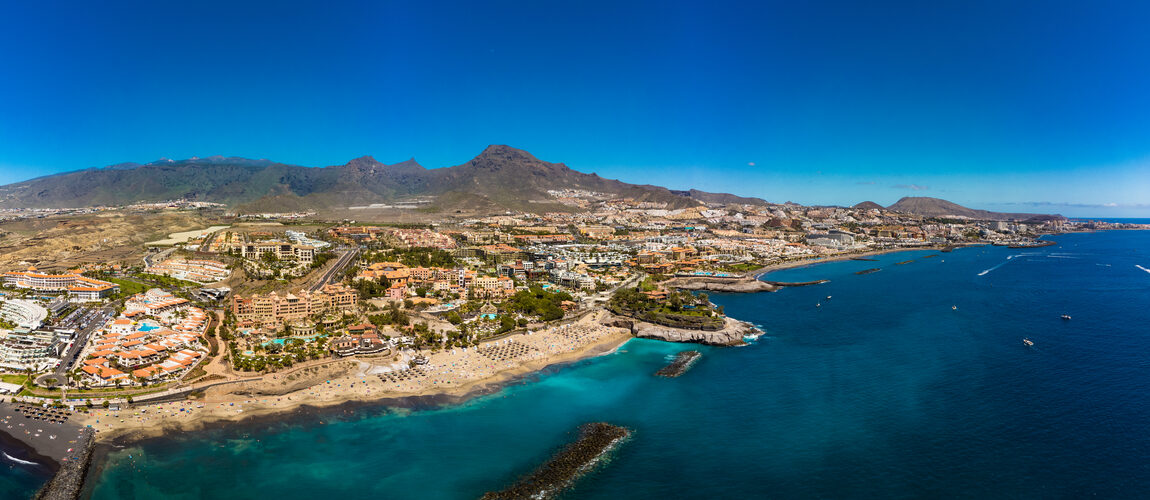
More than one in three homes sold in the Canary Islands last year went to a foreign buyer — in the province of Santa Cruz de Tenerife, four in ten. The Canary Government has spent a year asking Madrid and Brussels for the power to limit purchases by people who do not live here, the Balearic parliament has already voted on a bill to do exactly that, and every month a client in Costa Adeje or Corralejo asks the same question: is there a cap, and will there be one before I sign? The honest answer has three parts. No cap of that kind exists today. One much older rule already limits what a non-EU buyer may acquire on the islands, and it catches British buyers by surprise. And the room that European law leaves for a new one is narrow, and drawn along lines that have little to do with a passport.
What the islands are asking for, and what Brussels has answered
The numbers behind the politics come from the notaries' own statistics. In 2025 foreigners signed just over 35 % of all home purchases in the archipelago — 41 % in the province of Santa Cruz de Tenerife, 32 % in Las Palmas — against a national figure of 18 % in the second half of the year. Italians, Germans and Britons lead the list. Non-resident foreigners paid on average €3,242 per square metre in Spain in that half-year, against €1,839 paid by Spanish buyers: a different market, buying a different product, in the same towns.
On that basis the Canary Government has built a campaign in three moves. In September 2025 the President told the regional parliament that the Spanish Government had "assumed" the islands' arguments for limiting sales to non-residents; on 27 November 2025 the Ministry of Housing put that in writing, backing the Canarian request "before the European Union" and taking most of the islands' proposals into the State housing plan. On 20 May 2026, at the World Urban Forum in Baku, the President's office put the request to the Director of the European Commission's Housing Task Force — and was told, in the Government's own press note, that limiting purchases by non-residents "contradicts the basic principles of the Union" on the free movement of persons and goods. In June the Government's spokesman said the answer was to "change the law" — the State's Local Government Act — so that town halls could at least make purchases by non-residents dearer. No text has been published.
The islands are not alone, and the parallel is instructive. In February 2026 the Balearic parliament debated a bill that would have let municipalities under measurable housing stress restrict, for a time, purchases by non-residents, by companies and for second homes — a rule drawn, its authors said, "not by origin but by use". It was rejected at its first vote, on 24 February, by the governing majority, and even had it passed it would have needed the Congress in Madrid to adopt it. The Spanish Government's own instrument, the "100 % tax" on non-EU non-resident buyers announced in January 2025, is a bill that has been waiting for its first vote in Congress since September 2025; our note on where it stands is still current.
Why a residents-only rule needs a treaty, not a decree
The obstacle is not political will; it is the Treaty on the Functioning of the European Union, whose article 63 prohibits "all restrictions on the movement of capital between Member States and between Member States and third countries". Buying a house is a movement of capital, and the article protects a Berlin buyer and a Manchester buyer alike.
Three places in the Union do limit who may buy a home, and all three obtained their exception in the treaty itself, at the moment of joining. Denmark's protocol, signed at Maastricht in 1992, lets it "maintain the existing legislation on the acquisition of second homes". The Åland Islands' protocol of 1994 allows restrictions, "on a non-discriminatory basis", on the right of persons without the islands' regional citizenship to acquire and hold real property there. Malta's protocol of 2003 lets it keep its permit system for secondary residences bought by people who have not lived on the island for five years, provided the criteria are "published, objective, stable and transparent" and treat Maltese and other EU nationals alike. Spain joined in 1986 without any such clause, and a new one would need the agreement of every Member State. That is the wall the Canary Government hit in Baku.
Below treaty level, the Court of Justice has drawn the room that remains, in two cases every housing lawyer knows. In Konle (1999) it accepted that a region may pursue "maintaining, in the general interest, a permanent population and an economic activity independent of the tourist sector" — the Tyrol's problem and the Canaries' — but struck down a prior-authorisation scheme for land purchases because a simple prior declaration achieved the same supervision, and because the scheme in practice favoured nationals. In Festersen (2007) it held that Denmark could not make a buyer of agricultural land take up residence on it: the aim was legitimate, but a residence obligation was "particularly restrictive" of a fundamental freedom, and the State had not shown that less restrictive tools — taxes on resale, incentives to let — would not do. The lesson for the islands is precise: a rule that turns on use (a home that must remain a home, a quota of primary housing in a plan) and applies to Spaniards and foreigners alike can be defended; a rule that turns on residence or nationality cannot, whatever its figures. Whatever eventually reaches the Canary parliament will have to be drawn on that map.
The cap that already exists: the 1975 defence-zone rule
There is, however, a limit on foreign ownership in the Canary Islands that has been in force for fifty years and that most buyers have never heard of. The 1975 law on zones of interest for national defence created "zones of restricted access to property by foreigners", in which foreign persons and companies may not hold more than 15 % of the surface and every acquisition needs a prior military authorisation (Ley 8/1975, arts. 4, 16 and 18). Its 1978 regulation lists the zones, and the first entry is "insular territories: the totality of the islands and islets under national sovereignty", with the 15 % ceiling for islands at least the size of Formentera and 0 % for anything smaller (Real Decreto 689/1978, art. 32.1.a). The ceiling is counted island by island and, within each island, municipality by municipality, with the first kilometre of coast counted separately from the interior (art. 33.2).
Two things keep this rule from stopping the ordinary purchase. The first is that it does not apply to EU nationals: since 1990 the law's restrictions "shall not apply to natural persons holding the nationality of a Member State" of the Community, and EU companies are treated as Spanish ones (Ley 8/1975, additional provision). The second is the urban exemption: the surface of existing town centres and of their planned extensions is outside the regime altogether, provided the planning instrument carried a favourable report from the Ministry of Defence (Ley 8/1975, art. 16; RD 689/1978, art. 35), as are the areas declared of national tourist interest under the 1963 law (art. 38). A flat in Costa Adeje or a townhouse in Corralejo sits on urban land with an approved plan: no authorisation, no count.
Everything else is inside the rule, and since 1 January 2021 that includes British buyers, who became third-country nationals for this law on Brexit day, alongside Americans, Swiss, Latin American and every other non-EU purchaser. A rural plot, a finca in the interior of Fuerteventura or Tenerife, a country house on land classed as rústico, needs the Ministry of Defence's authorisation before the deed — and the Directorate-General of Legal Certainty confirmed in February 2022, in the case of a British couple buying rural land with an old house on it, that an isolated building does not turn a rural plot into an urban one and that the registrar was right to refuse registration until the authorisation, or a town-hall certificate proving the land's urban classification, was produced. The file goes to the Ministry through the regional military command, with passport, residence card if any, a conduct certificate from the country of residence and plans of the property (RD 689/1978, art. 79); the command has two months to report and the Minister two more to decide (art. 81), with plots of up to 2,000 square metres delegated to the regional command (art. 82). Deeds in restricted zones must be registered within eighteen months or are void, and the notary must warn the buyer of it in the deed itself (Ley 8/1975, art. 21); a non-EU heir who receives such land has three months to apply for the authorisation or a year to sell (art. 25). A Spanish company more than half owned or controlled by non-EU shareholders needs the authorisation too (art. 19).
For the political debate this old rule matters in one way: it shows what a legal cap looks like when it is drawn by security rather than by housing policy — a percentage, an authorisation and a register — and that Spain has lived with one for half a century without the market noticing. For a buyer it matters in a more practical way: it is the one check that decides whether your purchase takes three weeks or a season.
What changes for a buyer today: nothing — and three things to plan
An EU citizen buying anywhere in the islands faces no limit, no authorisation and no announced timetable for either. A non-EU citizen buying on urban land is in the same position. What every foreign buyer should plan is the same set of steps as before the headlines: a private purchase contract that says what it should — read our arras guide —, the NIE and the bank account, the transfer tax at 6.5 % on the reference value, and the taxes that arrive after completion: the non-resident income tax on an unlet home and, above the thresholds, the wealth tax. A non-EU buyer plans two more things: the days, because buying no longer buys residence and the 90/180 rule is now counted at the border, and the land classification, because a rural plot means the Ministry of Defence.
A buyer's checklist for the islands, September 2026
- Ask for the land's classification before the deposit: a certificado urbanístico from the town hall settles whether the plot is urban, and with it whether a non-EU buyer needs the military authorisation.
- If you are not an EU national and the land is rural, apply before you sign the deed, and write the authorisation into the private contract as a condition; count on the regulation's four months, and on more.
- Do not wait for a cap that does not exist: no Canarian, Spanish or European text limits purchases by non-residents today, and none has been published in draft.
- Watch two files, not the headlines: the Canary Government's request to the Commission, and the State's bill in Congress — both at the same stage they were a year ago.
- Plan residence separately from the purchase: the golden visa is closed to newcomers; days in Spain are counted at the border.
- Check the community's statutes if you mean to let: since April 2025 a three-fifths vote can bar holiday lets, whoever the owner is.
A cap by passport would need a treaty. A cap by use may one day pass a court. The only cap in force today is fifty years old, and it asks one question: is the land urban?
Our property team in Costa Adeje and Corralejo reviews the classification of the land, obtains the military authorisation where a non-EU buyer needs one, and drafts the private contract so that your deposit is protected while the file is pending. Read how we work in property law, or book a consultation with our offices in Tenerife or Fuerteventura.
Common questions
Is there a limit on foreigners buying property in the Canary Islands?
Not on residence or nationality. The Canary Government has asked the Spanish Government and the European Commission for the power to limit purchases by non-residents, and the Commission answered in May 2026 that such a measure contradicts the Union's basic principles; no Canarian, Spanish or European text has been published. The one limit in force is the 1975 defence-zone rule, which requires non-EU buyers of rural land to obtain a military authorisation and caps foreign ownership at 15 % of each island's surface outside the towns.
Do British buyers need a military authorisation in Tenerife or Fuerteventura?
Only for land outside the urban centres and their approved extensions: a rural plot or a finca. Since 1 January 2021 British citizens are non-EU nationals for this law. A flat or house on urban land with an approved plan needs no authorisation; the town hall's planning certificate proves it.
Could the Canary Islands adopt a rule like Malta's or Denmark's?
Those rules are written into the EU treaties themselves, agreed when Denmark, Finland and Malta joined. Spain has no such protocol, and adding one would need the agreement of every Member State. What the Court of Justice allows below that level is a rule based on the use of the home and applied to everyone alike, for planning aims — not a rule based on the buyer's residence or nationality.
What happened to the 100 % tax on non-EU buyers?
It is a bill registered in Congress in May 2025 that has been waiting for its first vote since September 2025 and was left out of the Government's January 2026 housing package. Nothing extra is payable today. Our separate note on the tax explains what it would do if it ever advanced.
Should I buy now, before a cap arrives?
A purchase decision should rest on the property, the price and the paperwork, not on a rule that does not exist. What we advise every non-EU client to do now is to check the land's classification early and to plan residence separately from the purchase, because those two things — not a cap — decide the calendar.
This article is general information about Spanish and European law as it stands at the date of publication, not legal advice for your specific situation. The Canary Government's request and the State's bill may move at any time; have your purchase reviewed with your own dates and documents.
This note is general information, not legal advice. For advice on your specific situation, consult a lawyer.
Wondering how this applies to your case?
A first consultation in person or by video, in any of our twelve working languages.