British residents in Spain: swapping the green certificate for the TIE now that EES is running
 Olga Caballero & Co.Law firm · Tenerife & Fuerteventura
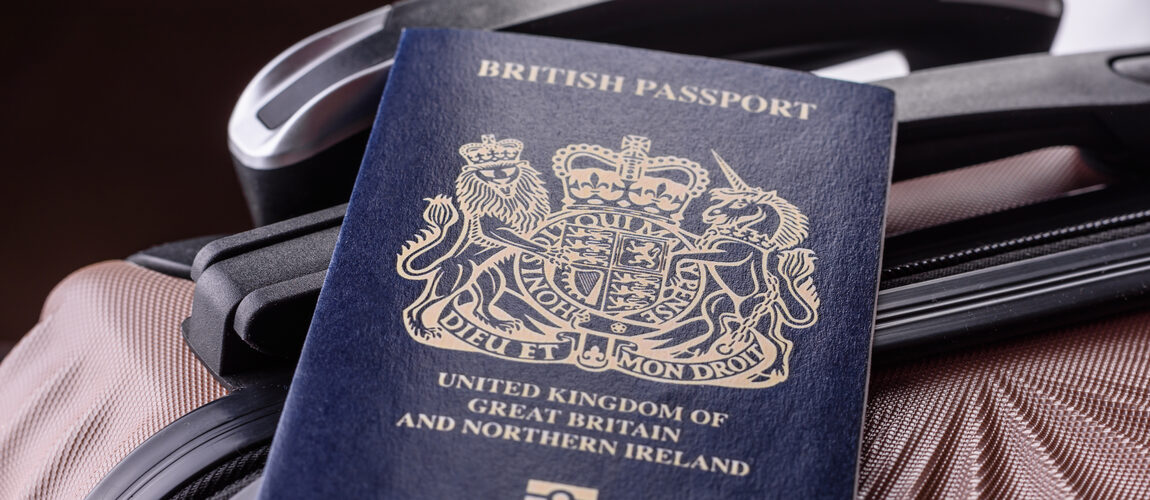
A couple from Leeds who bought in Costa Adeje in 2016 and registered as residents the following spring. In a drawer they keep the green A4 certificate the police gave them then, and they have never needed anything else: the bank, the health centre and the town hall all accepted it. In April 2026 they flew back from Manchester and the officer at Tenerife South asked for a residence card, took their fingerprints and a photograph, and told them their ninety days had started. Nothing about their right to live here had changed; what had changed was the border. This note explains why, what the Withdrawal Agreement actually gives a British resident, what the Spanish document called the TIE is, which of the six situations in the Spanish instruction applies to you, what the appointment costs and takes, how the renewals work, how long you may be away, and what to settle before you book. Quotations are in Spanish with the reading in English; the couple is invented, the rules are not, and every date is given as it stood on 21 October 2026.
Two documents, one right
The right comes from the Withdrawal Agreement between the United Kingdom and the European Union, in force since 1 February 2020, and it belongs to a defined group. Among them, in article 10, are los nacionales del Reino Unido que hayan ejercido su derecho de residencia en un Estado miembro con arreglo al Derecho de la Unión antes del final del período transitorio y sigan residiendo en él después de este período: British nationals who exercised a right of residence in a Member State under Union law before the end of the transition period, 31 December 2020, and who still reside there. Their family members are covered with them, including some who arrive later. Article 39 is the one most people have never read and should: Las personas amparadas por la presente parte gozarán de por vida de los derechos previstos en los títulos pertinentes de la presente parte, salvo que dejen de cumplir las condiciones establecidas en dichos títulos. The protection is for life, as long as the conditions go on being met.
The Agreement gave each State a choice about paperwork. Spain took the second route, in article 18.4, and said so in the joint instruction of the Directorate-General for Migration and the Directorate-General of the Police published in the Boletín Oficial del Estado on 4 July 2020: el Gobierno de España ha optado por la aplicación del artículo 18.4. Under that route nobody had to apply for a new status. The instruction's own words are the ones the British Embassy still quotes to Spanish banks and clerks: British residents and their families no tendrán la obligación de solicitar una nueva condición de residente ni someterse, por tanto, a un nuevo proceso de documentación, pero tendrán el derecho a recibir, de conformidad con las previsiones de la Directiva 2004/38, un documento de residencia que expresamente recoja su condición de beneficiario del Acuerdo de retirada. No obligation to re-apply, but a right to a document that names them as beneficiaries. The Ministry's own questions and answers put it in one line: No está obligado a solicitar el nuevo documento de residencia para seguir residiendo en España.
That is why two documents coexist today. The first is the registration certificate of a Union citizen, the green A4 sheet or the green card-sized paper, issued to British residents while they were still Union citizens and, under the instruction, still proof of their rights; it is the same certificate that EU citizens who settle in the islands receive now, as our note on EU citizens moving to the Canaries explains. The second is the residence document of article 18.4, which Spain issues in the format of a foreigner's identity card, the TIE. Both prove the same right inside Spain. Only one of them is read by the machines at the border.
The TIE «artículo 50 TUE»: what it is and how long it lasts
The card is not an ordinary TIE. The Commission's implementing decision of 21 February 2020 fixed a common format for the documents of article 18 across the Union, and the Spanish instruction applied it: the card is issued in the uniform format of a residence permit for third-country nationals, and en el campo correspondiente al Tipo de permiso deberá figurar «artículo 50 TUE», the permit type must read «artículo 50 TUE», with a remark in the observations field that it was emitido de conformidad con el artículo 18.4 del Acuerdo de retirada, issued under article 18.4 of the Agreement. Those words are what a border officer in Lisbon or Munich is trained to look for.
Its validity follows the Agreement's two kinds of residence. The instruction decided that se ha decidido que los documentos de residencia temporales tendrán una vigencia de 5 años y los permanentes de diez años: five years for a holder who has not yet completed five years of legal residence, ten years for one who has. Permanent residence is the Agreement's own concept, in article 15: those que hayan residido legalmente en el Estado de acogida con arreglo al Derecho de la Unión por un período continuado de cinco años have the right to reside permanently, and the periods before and after the end of the transition count together. The card marked «Permanente» documents that right; it does not create it, and losing or forgetting the card does not touch it.
The numbers say how many have made the exchange. The Ministry's statistical observatory counted, for the whole operation, that Desde julio de 2020 hasta diciembre de 2025, se han concedido 250.713 documentos de Acuerdo de Retirada a personas británicas y sus familiares: 250,713 Withdrawal Agreement documents granted to British nationals and their families between July 2020 and December 2025. The same page adds, in the Ministry's words, that esta estadística ha dejado de actualizarse al desaparecer la situación que la justificaba, the series has stopped because the situation that justified it no longer exists. Nobody publishes how many green certificates are still in drawers; the British Embassy's guidance treats them as common enough to keep a whole section on the exchange.
The Entry/Exit System: why the card now matters at the border
The Entry/Exit System is the Union's register of non-EU travellers on short stays. Regulation (EU) 2017/2226 created it, and the Commission's own page records the two dates that matter: On 30 July 2025, the Commission set 12 October 2025 as the launch date for the progressive start of operations of the Entry/Exit System (EES). The system became fully operational on 10 April 2026. The progressive start was a legal concept, not a courtesy: Regulation (EU) 2025/1534 defined it as el período de 180 días a partir de la fecha en que el SES vaya a entrar en funcionamiento según lo decidido por la Comisión, a period of 180 days from the Commission's start date, during which Member States could still stamp passports at some crossings. Since 10 April 2026 the stamp is gone, and a British visitor's entries and exits are recorded with a facial image and fingerprints against the ninety days in any one hundred and eighty, which our note on the 90/180 rule after EES explains day by day. On 21 October 2026 the Policía Nacional's own page on the system still opens with the notice of the progressive phase, Tenga en cuenta que el Sistema de Entradas y Salidas se está implantando progresivamente, a reminder that official pages lag the border.
A resident is not a short-stay traveller, and the Regulation says who is outside the system. Article 2.3 excludes, among others, los titulares de los permisos de residencia del artículo 2, punto 16, del Reglamento (UE) 2016/399 distintos de los contemplados en las letras a) y b) del presente apartado, the holders of residence permits as the Schengen Borders Code defines them, and that Code's definition begins with todo permiso de residencia expedido por los Estados miembros siguiendo el modelo uniforme establecido por el Reglamento (CE), every permit issued in the Union's uniform format. The TIE of article 18.4 is exactly that: a uniform-format permit. The green certificate is not; it was designed for Union citizens, who never needed a permit, and it does not fit the definition the border reads.
The British Government's guidance, which is the text most of our clients have in their hands, draws the consequence without hedging. Its page on living in Spain says: If you have a ‘green’ certificate (Certificado de Registro de Ciudadano de la Unión Europea), you will need to register with the EES. And: The TIE is the only valid residency document listed in the Withdrawal Agreement. Its page on registering and getting a TIE, published on 22 December 2025, says of the green certificate that under the EES it will not be accepted as proof of legal residency status at Spanish or other Schengen borders. That is a reversal, and it should be said plainly. In early 2024 the British Embassy in Madrid circulated a letter, still downloadable from the same site, which said of the green certificate that this document exempts UK nationals from the upcoming Entry Exit System (EES). The guidance was changed on 21 March 2025, before the system started, to say the opposite. The letter remains true about the right; it is no longer true about the border.
What the couple from Leeds met at Tenerife South follows from this. The officer saw a British passport and no permit the system recognises, so the system treated them as visitors: biometrics taken, an entry recorded, a ninety-day clock started. Nothing was taken from them in law, and a border officer who is shown a green certificate may, and often does, let the resident through on the strength of it; but the record created that day is a visitor's record, and on a later trip the system may count them as overstayers. For a resident the exemption has to be visible to the machine, and only the card does that. Our note for non-EU visitors on EES and ETIAS covers the travellers' side.
Which case you are in
The instruction does not have one procedure but six, and the first thing to settle is which is yours. For a British national the dividing lines are whether you hold a registration certificate at all, whether it is temporary or permanent, and whether you have completed five years. For a family member who is not British or an EU citizen the lines are the same, drawn on the family card. The instruction states the design in one sentence: obtaining the document requerirá un paso (ante las dependencias policiales que se habiliten que lo expedirán, previo pago de las tasas establecidas) o dos pasos (ante la oficina de extranjería que concederá, en su caso, el documento de residencia y, después, ante la dependencia policial que se habilite que expedirá el documento, previo pago de las tasas establecidas): one step at the police, or two steps, the immigration office first and the police after. The table puts the cases side by side.
| Your document today | What you ask for, where, and what you get |
|---|---|
| A temporary green certificate and under five years in Spain | One step, at the police: the TIE marked «Temporal», valid five years; from the fifth year a ten-year card may be asked for before it expires |
| A temporary green certificate and five years or more | One step, at the police, which verifies the length of residence: the TIE marked «Permanente», valid ten years |
| A permanent green certificate | One step, at the police: the ten-year TIE marked «Permanente» |
| No certificate, resident before 31 December 2020 | Two steps: the oficina de extranjería decides on proof of residence, means and health cover within three months; the police issue the card, asked for within one month |
| A family member holding a temporary family card | One step, at the police: a five-year card, or ten years once the five years are complete |
| A family member with no card, or joining the British relative now | Two steps: the oficina de extranjería, with the family link proved and the relative's document; then the police |
| A five-year TIE reaching its expiry | A renewal: the card is reissued for ten years and marked «Permanente» |
| A ten-year TIE reaching its expiry | A renewal for another ten years; missing the window never costs the right |
Two reminders in the instruction decide many borderline cases. The first is about dates: Se presumirá que el inicio de la residencia legal en España se ha producido en la fecha de expedición del certificado de registro temporal si este se hubiese emitido, legal residence is presumed to have begun on the date the temporary certificate was issued. The couple from Leeds registered in the spring of 2017, so their five years ran out in 2022 and they are in the second row: one visit to the police and a ten-year card, whatever their old certificate says. The second is about being away: the Agreement does not require physical presence at the end of 2020, and the authorities must accept ausencias temporales que no afecten al derecho de residencia, así como ausencias más prolongadas que no afecten al derecho de residencia permanente, temporary absences that do not affect the right of residence and longer ones that do not affect permanent residence, both for the first issue and for every renewal.
The appointment, the papers and the fee
For the one-step cases the instruction lists four things, and they have not changed since 2020. The form is Impreso de solicitud -EX 23 Solicitud de tarjeta (art. 18.4 Acuerdo de Retirada), the EX-23 card application; a valid passport, and if it has expired, a copy of it together with the renewal application; the receipt of the fee, Impreso acreditativo del abono de la tasa correspondiente (modelo 790, código 012), form 790 code 012; and one photograph to the standard of the Spanish identity card. The fee is set by the police's own table, dated on its page 21 October 2026, under the line TIE asociada al Acuerdo de Retirada de ciudadanos británicos y sus familiares: €12.00, the same as the registration certificate it replaces. That is the Agreement working as written, since article 18 requires that the document be issued con carácter gratuito o mediante pago de una tasa que no rebase la impuesta a los ciudadanos o nacionales del Estado de acogida por la expedición de documentos similares, free or for no more than a Spaniard pays for a similar document; the ordinary TIE for a first residence permit costs €16.08 on the same table and a renewal €19.30. The fee form is generated and paid before the appointment, and the card is collected in person on a second visit, passport in hand.
The appointment itself is the hard part, and the British Government says so in its guidance: It can be difficult for some British nationals in Spain to get an appointment to apply for or renew their TIE. In Tenerife and Fuerteventura the one-step cases go to the police stations that handle foreigners' documents, in Santa Cruz, in the south of Tenerife and in Puerto del Rosario, through the national appointment system; the two-step cases begin at the oficina de extranjería of the province, in person or electronically, and only then reach the police. Where no appointment can be found for weeks, the guidance lists the routes that exist: checking the system daily, using a digital identity to reach slots that open at odd hours, using a professional, and a complaint to the Government delegation of the province and, after it, to the Defensor del Pueblo. We use all of them.
The two-step cases carry their own clock. The oficina de extranjería's receipt matters from the first minute: se entregará de forma inmediata un resguardo acreditativo de la presentación de la solicitud del documento de residencia, que será suficiente para acreditar su situación de estancia legal hasta la entrega de este, a receipt that proves lawful presence until the card is delivered. The decision follows, la resolución sobre el documento de residencia se dictará y notificará en el plazo máximo de tres meses, within three months at most; and then the applicant must move, because En el plazo de un mes a contar desde la notificación de la resolución sobre el documento de residencia, deberá solicitar, personalmente, su expedición: one month from notification to ask the police for the card. A refusal is not the end; the instruction provides that the office's decisions podrán ser objeto de recurso de alzada ante la persona titular de la Delegación o Subdelegación del Gobierno correspondiente, an administrative appeal to the Government delegation, with the courts after it.
Renewing, travelling while you renew, and how long you may be away
The first cards issued from July 2020 have been expiring since the summer of 2025, which is why the renewal rules are suddenly practical. The instruction's sixth rule gives two outcomes. For the holder of a temporary card, se expedirá un documento de residencia por diez años, renovables de forma automática cada diez años: a ten-year card, renewable automatically every ten years, marked «Permanente». For the holder of a permanent card, another ten years. The timing is precise: the application goes in durante el mes anterior a la caducidad del documento de residencia, pudiendo también presentarse dentro de los tres meses posteriores a dicha fecha de caducidad sin perjuicio de la sanción administrativa que corresponda, in the month before expiry or within the three months after, the latter with a possible fine. And then the sentence that answers the question clients ask most: La no presentación de solicitud de renovación del documento de residencia en los plazos establecidos en el apartado 2 no supondrá en ningún caso pérdida de su derecho de residencia permanente. Missing the renewal window never costs permanent residence. It costs a card, a fine and, since April, trouble at the border.
Travelling between the application and the new card is the gap that the system has made expensive. The British guidance is short about it: If you need to leave Spain while waiting for your TIE renewal, you must apply for an ‘Autorización de Regreso’. The return authorisation is a police document that lets the holder re-enter Spain while the card is being made, and an airline may refuse boarding to a British passport with an expired card and no authorisation. The Comisaría General de Extranjería y Fronteras saw the problem coming at the end of 2025 and, according to the practitioners who published its content, issued an instruction on 20 November 2025, in force from 24 November 2025 to 11 January 2026, that let British residents with cards in renewal travel over Christmas with a lighter regime by land and sea and insisted on the authorisation by air. It was a seasonal measure and it has lapsed; the gap it addressed has not.
How long you may be away is governed by the Agreement, not by the card. Before permanent residence, continuity is measured by the free-movement directive's rule, which the Agreement adopts in article 15.2 and the directive states in article 16.3: La continuidad de la residencia no se verá afectada por ausencias temporales no superiores a un total de seis meses al año, ni por ausencias de mayor duración para el cumplimiento de obligaciones militares, ni por ausencias no superiores a doce meses consecutivos por motivos importantes como el embarazo y el parto, una enfermedad grave, la realización de estudios o una formación profesional, o el traslado por razones de trabajo a otro Estado miembro o a un tercer país. Six months a year, or twelve consecutive months for an important reason, and the five years keep running. Once permanent residence is acquired the Agreement is more generous than the directive it borrows from: Una vez adquirido, el derecho de residencia permanente solo se perderá por ausencia del Estado de acogida durante más de cinco años consecutivos. More than five consecutive years away, and only that, ends it. A retired couple who spend seven months of each year in Yorkshire are not losing their permanent right; they are, under the Entry/Exit System, spending those months as visitors unless the card in their wallet says otherwise.
Family members and late arrivals
The Agreement's protection extends to family members, and the Spanish instruction documents them with the same card. A spouse or registered partner, a child or a dependent parent who was living in Spain with the British resident before the end of 2020 is covered; so, under article 10.1.e, is one who lived elsewhere then and joins the British resident now, provided the family relationship existed before the end of the transition period, and so is a child born or adopted after it. For a family member who is neither British nor an EU citizen the instruction's fifth rule mirrors the fourth: a holder of a temporary or permanent family card goes to the police in one step; one without a card, or arriving now, applies first at the oficina de extranjería, on form EX-21, with Documentación acreditativa, en su caso debidamente traducida y apostillada o legalizada, de la existencia del vínculo familiar, matrimonio o unión registrada que otorga derecho a la tarjeta, the proof of the marriage, partnership or kinship, translated and apostilled where needed, and the British relative's own certificate or card. Their card's length follows the British relative's: five years while the relative has under five years of residence, ten when the relative has more.
Late arrivals have a deadline the first wave never had. For anyone whose right of residence begins after the transition period, the instruction fixes that el plazo para presentar la solicitud será de tres meses desde su llegada a España o desde que se produzca el nacimiento, three months from arrival or from the birth, with an extension where the delay is justified. And a British national who lived here before 2021 but never registered is not shut out: the two-step route asks for Documentación acreditativa de que el solicitante se encuentra incluido en el ámbito de aplicación personal del Acuerdo, en concreto, del inicio de su residencia en España, debiendo admitirse cualquier medio de prueba admitido en derecho, proof of the start of residence by any means admitted in law, together with the evidence of means and health cover that the free-movement rules required in 2020. Padrón certificates, rental contracts, utility bills, school records and bank statements from before 31 December 2020 are what win these files.
Before the appointment: ten things to settle
- Your date. Find the issue date of your green certificate or family card; the instruction presumes your legal residence began that day, and it decides whether your card will say «Temporal» or «Permanente».
- Your five years. Count from that date, adding the time before and after the end of 2020 together as article 15 requires; if the five years are complete, ask for the ten-year card even if your old certificate is temporary.
- Your absences. List the months you have spent outside Spain each year since you registered; under six months a year, or under twelve for an important reason, the clock has kept running, and only more than five consecutive years away can undo a permanent right.
- Your passport. It must be valid at the appointment and at collection; an expired passport is accepted with a copy and the renewal application, but a passport renewed between the two visits means bringing both.
- Your padrón. The police do not ask for it in the one-step cases, but a current certificate of empadronamiento is the first thing the oficina de extranjería will read in a two-step file and the first proof of continuity in any dispute.
- The fee. Generate and pay form 790 code 012 before the day, €12.00 per person, and bring the stamped or printed receipt; a receipt for the wrong code is the commonest reason for being sent away.
- The photograph. One recent photograph to the Spanish identity-card standard; the appointment also takes fingerprints, so the person must attend in person.
- The appointment itself. Book through the police system for the one-step cases and the oficina de extranjería for the two-step ones; if nothing opens for weeks, keep the dated screenshots, since they support the complaint routes the British guidance lists.
- Your travel. Do not fly between the application and the collection on an expired or missing card without a return authorisation, and carry the card with the passport on every trip once you have it, so that the exemption from the Entry/Exit System is visible at the booth.
- Your family. Apply together where you can, since the instruction says that applications from one family presented at once are handled jointly; and bring the apostilled and translated proof of the relationship for any family member who is not British or an EU citizen.
What our team does
The firm's residency and immigration practice handles EU-citizen registration and family cards, renewals, modifications and long-term status, and the appeals and rework when a file is refused, from the offices in Costa Adeje and Corralejo and before the extranjería offices in Santa Cruz de Tenerife and Puerto del Rosario. For a British resident that means reading the certificate and the dates to say which of the six cases applies, counting the five years and the absences, preparing the EX-23 or the two-step file with the proof of residence that the office will accept, securing the appointment, and, where a card expires with a journey booked, obtaining the return authorisation in time. The team advises in Spanish, English, German, Russian and Italian in-house. If your green certificate is still in the drawer, or your card expires before a trip, write to us with a scan of the document you hold and the dates you registered and travelled, and we will tell you which row of the table you are in and what the appointment needs.
Common questions
Do I have to swap my green certificate for the TIE?
No. Spain chose the declaratory route of article 18.4, and the instruction of 2020 says in terms that beneficiaries are not obliged to apply for a new status or a new document; the green certificate remains proof of the right inside Spain. Since 10 April 2026, however, the Entry/Exit System is fully operational and the British Government's guidance says the green certificate does not exempt you from it at the border. The right is intact; the document that proves it to the machines is the TIE.
What does the card cost and how long does it take?
The fee is €12.00 per person, form 790 code 012, the same as the registration certificate, as the Agreement requires. In the one-step cases the card is applied for at the police in one visit and collected in a second, usually within weeks of the appointment. In the two-step cases the oficina de extranjería has up to three months to decide and the applicant then has one month to ask the police for the card, with the office's receipt proving lawful presence in the meantime.
My TIE has expired. Have I lost my residence?
No. The instruction says that failing to apply for the renewal within the deadlines never entails the loss of permanent residence. Apply in the month before expiry or within the three months after it; a late application may carry a fine. What an expired card does cost is at the border, where the Entry/Exit System reads only a valid permit, so travel between expiry and the new card needs a return authorisation.
I spend half the year in the United Kingdom. Am I still a resident under the Agreement?
The Agreement measures continuity by the free-movement rule: absences of up to six months a year, or up to twelve consecutive months for an important reason such as illness, study or a posting, do not break residence while the five years are running. Once permanent residence is acquired, only more than five consecutive years outside Spain ends it. Six months abroad every year is therefore compatible with the right; it is not compatible with being treated as a resident at the border without the card.
My wife is not British or European. Can she get the same card?
Yes. Family members are covered by article 10 of the Agreement, including a spouse who joins you now if the marriage existed before the end of 2020 and children born after it. A family member without a card applies first at the oficina de extranjería, on form EX-21, with the apostilled and translated proof of the relationship and your own certificate or card; her card lasts five years while you have under five years of residence and ten once you have more.
General information on the law as it stands in October 2026 (Withdrawal Agreement, articles 10, 11, 13, 15, 18 and 39; the joint instruction published by the Resolución de 2 de julio de 2020, BOE of 4 July 2020; Regulation (EU) 2017/2226, article 2; Regulation (EU) 2016/399, article 2; Regulation (EU) 2025/1534, article 2; Directive 2004/38/EC, article 16; the European Commission's and the UK Government's pages as read on 21 October 2026). It is not advice on a particular case: your dates, your absences, your family and the document you hold decide what applies to you.
This note is general information, not legal advice. For advice on your specific situation, consult a lawyer.
Wondering how this applies to your case?
A first consultation in person or by video, in any of our twelve working languages.
Keep reading

Forced heirship in Spain: what a parent can and cannot do with a will (and when disinheriting holds)

Planning for incapacity in Spain: the preventive power of attorney, the support measures of 2021 and what a foreign retiree should sign before it is needed